📖 Travel diary

South Africa 2026

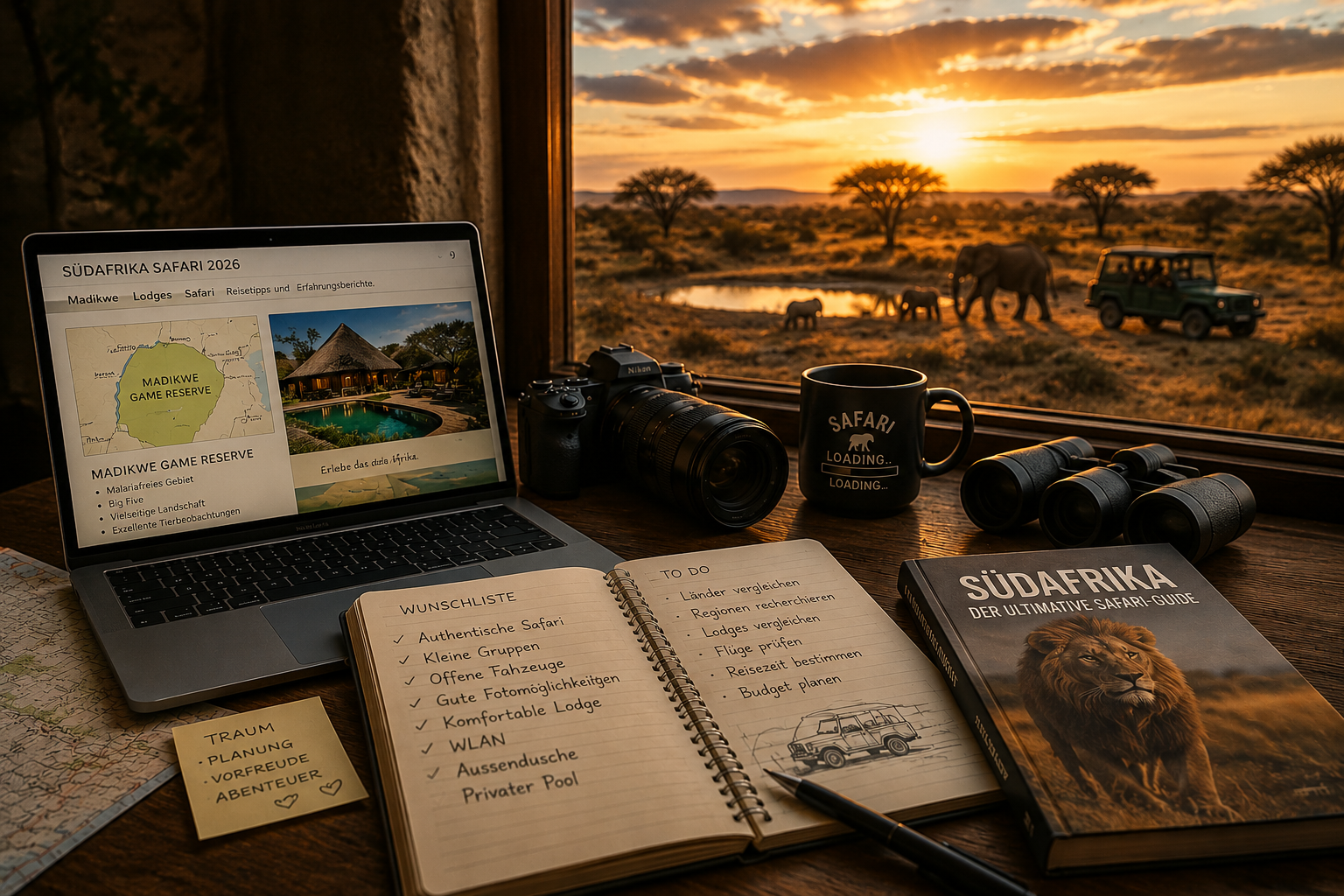
From the first idea to the safari itself: this is my personal travel diary about planning, photography, preparation and the big adventure in South Africa.

8 Blog posts
16 Photos
2 Videos
2026 Safari project

The diary for my safari project

The posts are sorted chronologically. The oldest entry is opened first, so you can follow the project from the very beginning.

The Idea Takes Shape
Read
For many years, I’ve carried a wish with me: one day, I want to experience a real safari in Africa. I’ve always been fascinated by animals, especially when you can watch them in their natural habitat rather than just seeing them in documentaries or zoos.


For a long time, though, this wish remained just a dream. While I was living in Switzerland, my financial situation hardly allowed for big trips. A safari is definitely not one of the cheapest experiences, so while it was on my personal bucket list, it never quite felt within reach.

Moving to Spain changed a lot. The cost of living is lower, and today I have much more financial freedom to fulfill long-held dreams. That’s how the idea of a safari came back – at first just a thought, then becoming more and more concrete.

It’s especially important to me to see the animals in their natural environment. Watching lions, elephants, rhinos, leopards, or buffaloes roaming wild is something completely different from any photo or video. At the same time, I’m fully aware that the African wilderness isn’t a theme park. It’s this mix of respect, fascination, and adventure that makes the experience so special for me.


Another big reason for this trip is my passion as a photographer and videographer. I’ve loved capturing photos and videos for many years. What I enjoy the most is not just shooting them, but editing afterward on the computer. Enhancing photos, preserving memories, and stitching together a meaningful video from single shots is just as much part of the experience as the trip itself.


The wildlife in Africa offers unique photo opportunities. Photographing animals in the wild and capturing special moments on camera is a huge extra motivation for me to make this dream come true. Since moving to Spain, I also have a lot more time for my hobbies. This allows me to dive deep into planning the trip and later invest plenty of time in editing photos and videos.

Since I will most likely only make a trip like this once in my life, I want to plan it carefully from the very start. It’s important to me that the accommodation, wildlife viewing, and the entire experience meet my expectations. I’d rather plan and save a bit longer than miss out on a trip I’ll remember for a lifetime.

What began as an idea is gradually turning into a concrete project. With this website, I want to document the journey from the first thoughts to the actual safari and invite everyone interested to join me in the planning and later in the on-site experiences.

If all goes as planned, I will be riding through the African wilderness in an open safari vehicle at the end of August or early September 2026. Right now, it’s still just a dream, but for the first time, it feels within reach.

The South African adventure begins.
Open single view Project page
Why the Project Became Bilingual
Read
From a Trip to a Project

When the idea of a safari in South Africa first came up, I initially thought of it as just an ordinary travel plan.
I wanted to gather information, compare different regions, find the perfect lodge, and prepare myself photographically for the adventure.
But the more I immersed myself in the subject, the greater the excitement grew.
At the same time, I felt a desire to document the entire journey.

Not just during the safari, but already months beforehand.

The planning, the decisions, the preparation of camera gear, and the many little steps leading up to takeoff are just as much part of the adventure as the trip itself.
That’s how the idea for a dedicated safari project came about.

More Than Just Memories

From the very beginning, it was clear I didn’t want to document the trip only for myself.
I wanted to take photos.
Record videos.
Later, create a detailed travel film.
Maybe even publish a small book about the entire journey.

The longer I thought about it, the more I realized that the real story actually begins long before takeoff.
So why wait to start documenting until I’m in South Africa?

The First Version Was Planned Only in German

Originally, the project website was intended to be solely in German.
After all, German is my native language, and most visitors to my homepage come from German-speaking countries.
But as the planning continued, the same question kept popping up:
Why should this project be available only in German?

Safari Connects People from All Over the World

A safari in South Africa isn’t a topic limited to German speakers.
People from all around the globe travel to South Africa every year to experience its unique wildlife and breathtaking landscapes.
Many of the travel reports and sources I used in my research were also written in English.

It became increasingly clear to me:

If you’re interested in safaris, you will sooner or later have to navigate the English language.

Spain, South Africa, and the World

Another thought also played an important role.

I live in Spain.
Many people I meet here speak English far better than German.
At the same time, the trip takes place in South Africa.

Even the staff at the Rhulani Safari Lodge, the rangers, and many others on site speak English.

How wonderful would it be if they could also read my reports later?
Maybe even see the photos and videos from the trip.

Supporting Other Travelers

During my planning, I greatly benefited from the experiences of other travelers.
Travel reports, blogs, videos, and personal stories helped me make many decisions.
From choosing the region to selecting the lodge.
That’s why I wanted to pass along my own experiences later on.

Maybe my reports will one day help another safari newbie find the perfect region or the right lodge.

Maybe my journal answers questions I still find myself asking today.

More Reach, More Possibilities

Of course, having an English version also means reaching far more people.
Not because it’s about racking up visitor numbers,
but because exciting travel stories can connect people regardless of where they come from.
Whether someone lives in Germany, Switzerland, Austria, Spain, South Africa, or anywhere else in the world—the fascination with Africa knows no language barriers.

The Technical Challenge

Deciding to make the website bilingual, however, brought a new challenge.
Suddenly, it wasn’t just about writing blog posts.
Every entry also had to be available in English.
Navigations, project pages, newsletters, and many other sections had to be adapted too.
What started as a small travel documentation gradually evolved into a much bigger project.

Looking Ahead

Today, I’m glad I took this step.

The bilingual version makes the project more open, international, and accessible.
It allows people from different countries to follow the journey from the very first idea to the return from South Africa.

And that’s exactly what this project is about.

Not just about experiencing a safari.

But about showing how a dream slowly turns into reality.

Maybe this journey will one day inspire others to make their own dreams come true.

"What started as a travel idea became a project. What started as a project became a bilingual travel journal. And the real journey hadn’t even begun yet."
Open single view Project page
Region Chosen
Read
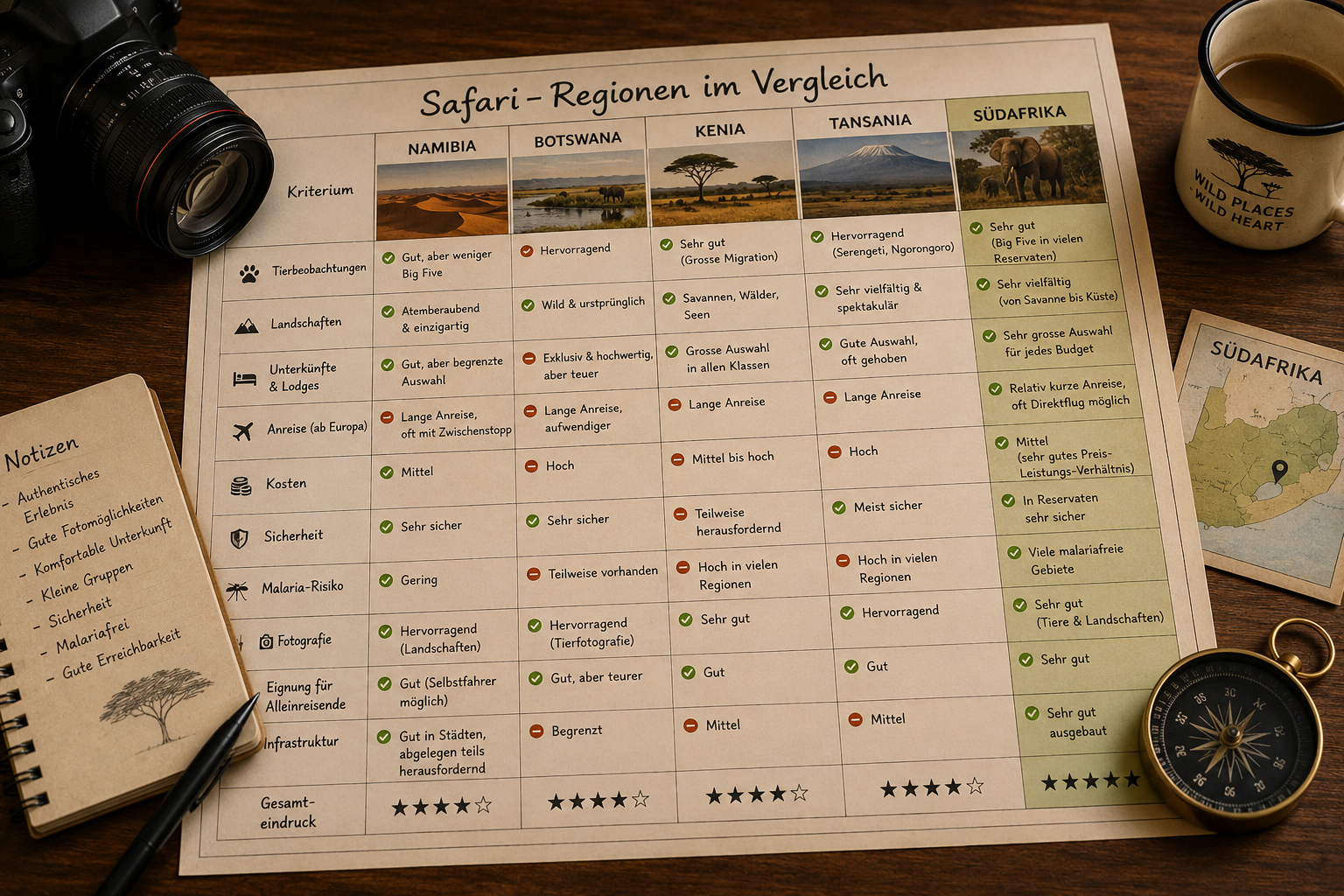
After reading countless travel reports, watching videos, and comparing various safari destinations, a few favorites stood out. Namibia, Botswana, Kenya, Tanzania, and South Africa were top contenders on my list for quite a while.

Each of these countries has its own unique charm. So, I began systematically comparing the different options.

Comparison of Possible Destinations

Namibia

✅ Spectacular landscapes
✅ Low population density
✅ Ideal for photographers
❌ Fewer classic Big Five safaris

Botswana

✅ Untouched wilderness
✅ Excellent wildlife viewing
❌ Higher costs
❌ More complicated travel logistics

Kenya

✅ Large animal migrations
✅ Famous savannahs
✅ Many national parks
❌ Long travel times
❌ Greater distances to cover

Tanzania

✅ Serengeti
✅ Ngorongoro Crater
✅ Impressive wildlife
❌ Higher travel costs

South Africa

✅ Excellent infrastructure
✅ Wide selection of lodges
✅ Easily accessible
✅ Malaria-free regions available
❌ Some areas more developed for tourism


As I researched more, I found that many of my criteria aligned especially well with South Africa.

Why South Africa Became Increasingly Appealing

For me, the focus wasn’t just on the animals. A smooth journey, high-quality accommodations, great photo opportunities, and the ease of planning a trip solo were equally important.

What really convinced me:
✓ Wide range of safari regions
✓ Many high-quality lodges across different price levels
✓ Good accessibility from Europe
✓ No visa requirement for Swiss tourists on typical vacation stays
✓ Malaria-free reserves as attractive alternatives
✓ Outstanding opportunities for wildlife photography
✓ Well-developed tourist infrastructure
✓ English widely spoken as the travel language
✓ High chances of spotting the Big Five
✓ Ideal for solo travelers
✓ Great mix of adventure and comfort
✓ Comparatively good value for money
✓ Plenty of reviews and information available for planning

The longer I researched, the more South Africa kept drawing me in. It perfectly blended adventure, comfort, and wildlife – exactly what I hoped for on my first safari.

The Decision Is Made

At some point, I realized that while the other countries still fascinated me, my search kept bringing me back to South Africa.

The decision, then, surprisingly came quite easily.

My 2026 safari will take place in South Africa.

With this, the first major milestone for the project was complete. But the next challenge was already waiting: choosing the right safari region and the perfect lodge.

“The country was chosen – but the real adventure of planning had only just begun.”
Open single view Project page
Comparing Safari Regions – The Great Research Begins
Read
Planning Takes Shape

Deciding on South Africa was a big step done. But it quickly became clear to me that this was just a small part of the planning process.
South Africa offers an enormous variety of safari areas. Some are world-famous, others are still considered hidden gems. Some lie in malaria zones, others do not. Some offer particularly luxurious lodges, while others promise a very authentic nature experience.
The more I researched, the clearer it became that choosing the right region would be at least as important as picking the lodge later on.
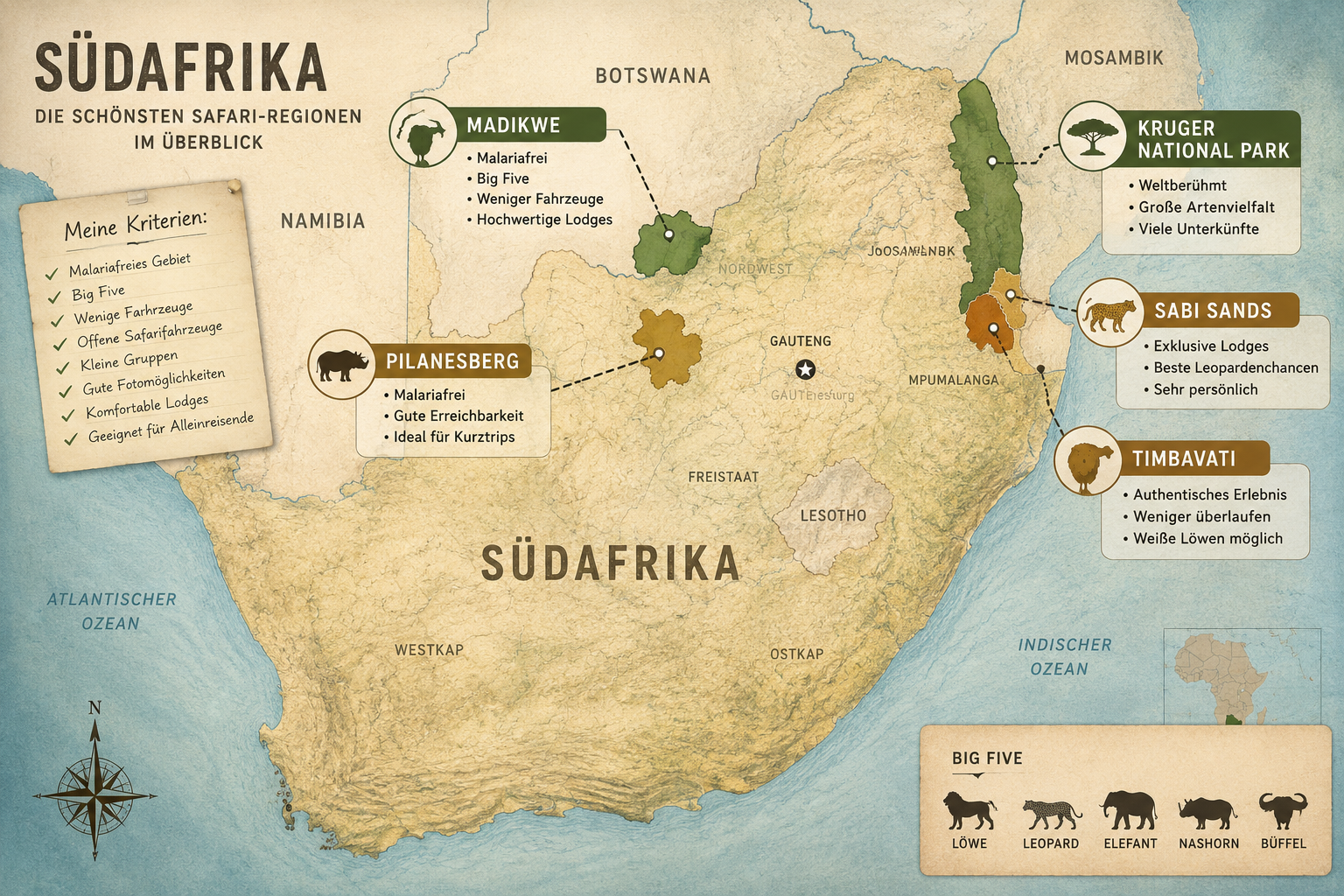


What Do I Expect from My First Safari?

Before I could compare regions, I had to answer another question first:
How do I actually imagine my perfect safari?
I started by making a list of points that mattered most to me.

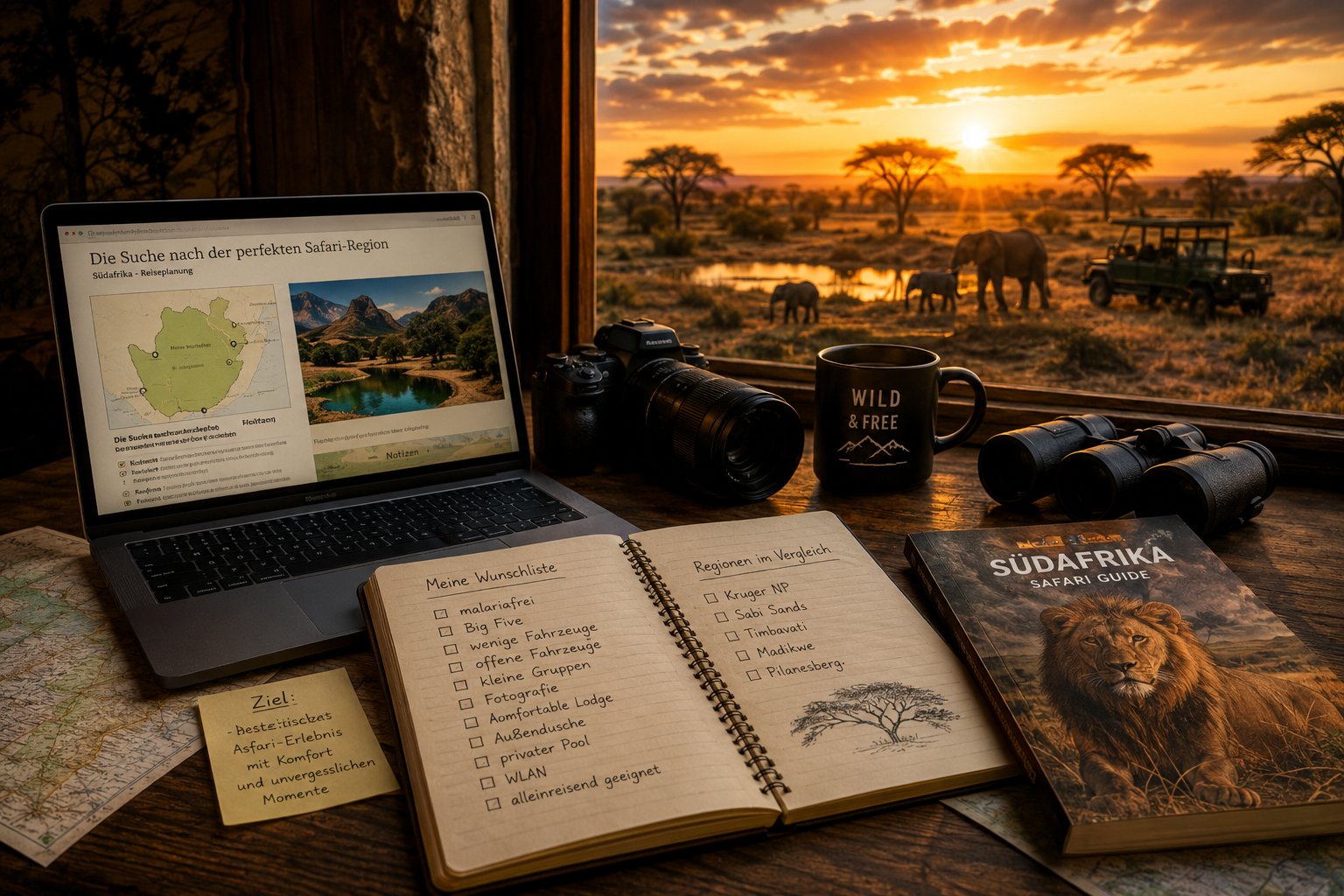
My Wishlist

✓ Malaria-free area
✓ Good chances of spotting the Big Five
✓ Open safari vehicles
✓ Few vehicles during game drives
✓ Small safari groups
✓ Good conditions for wildlife photography
✓ Comfortable lodge
✓ Outdoor shower
✓ Private small pool
✓ Wifi
✓ Suitable for solo travelers
✓ Easy access via Johannesburg

This list would guide me throughout my research.

National Park or Private Reserve?

One of the first questions was:

Should it be a national park or a private wildlife reserve?

In Kruger National Park, many visitors drive through the area in their own vehicles. This offers a lot of freedom but also means more traffic and sometimes larger crowds at popular sightings.

Private reserves work differently.

Game drives take place in open safari vehicles with experienced rangers. Often, vehicles are permitted to leave the roads to get better views of animals.

The more I read about this, the more interesting private reserves became to me.

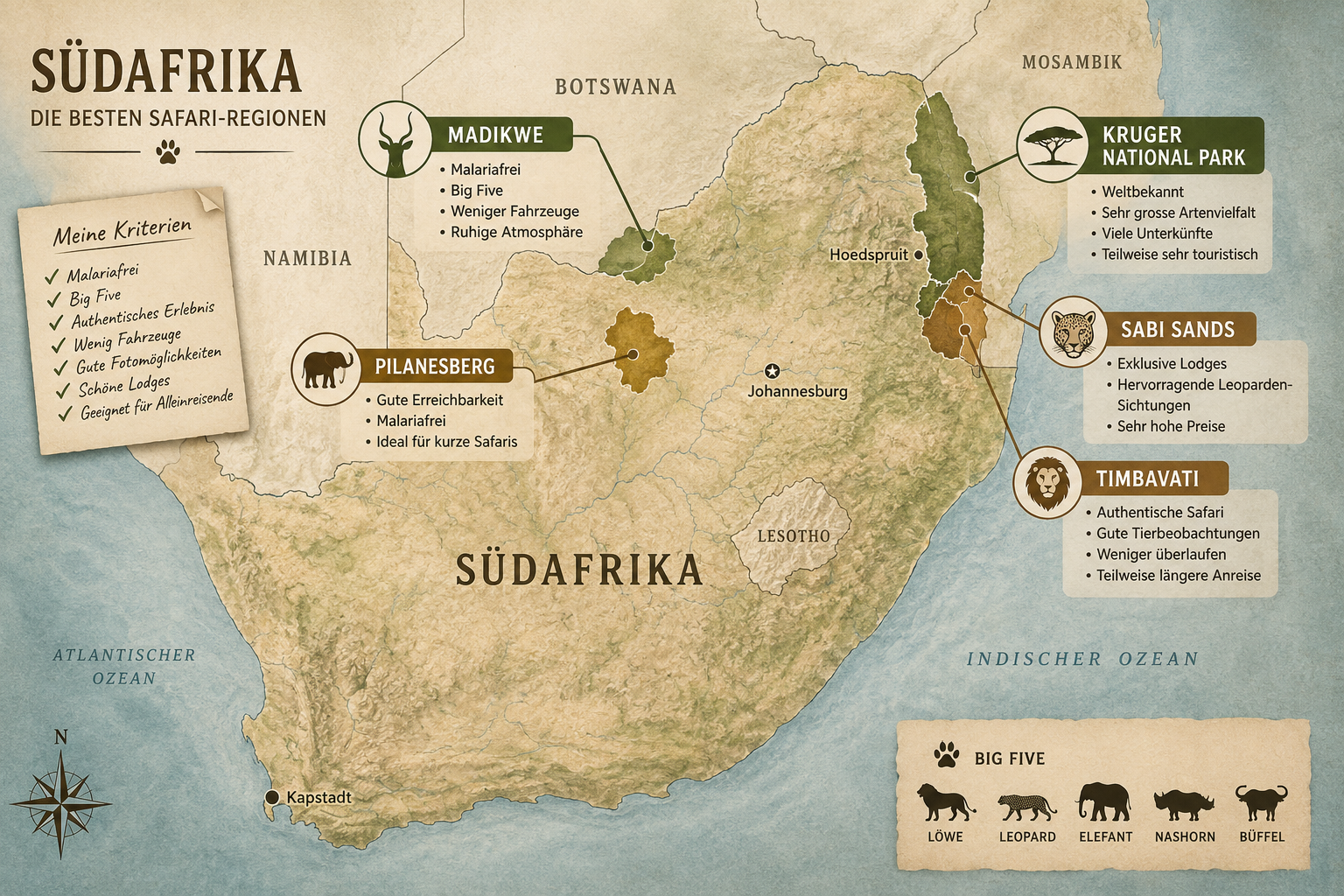
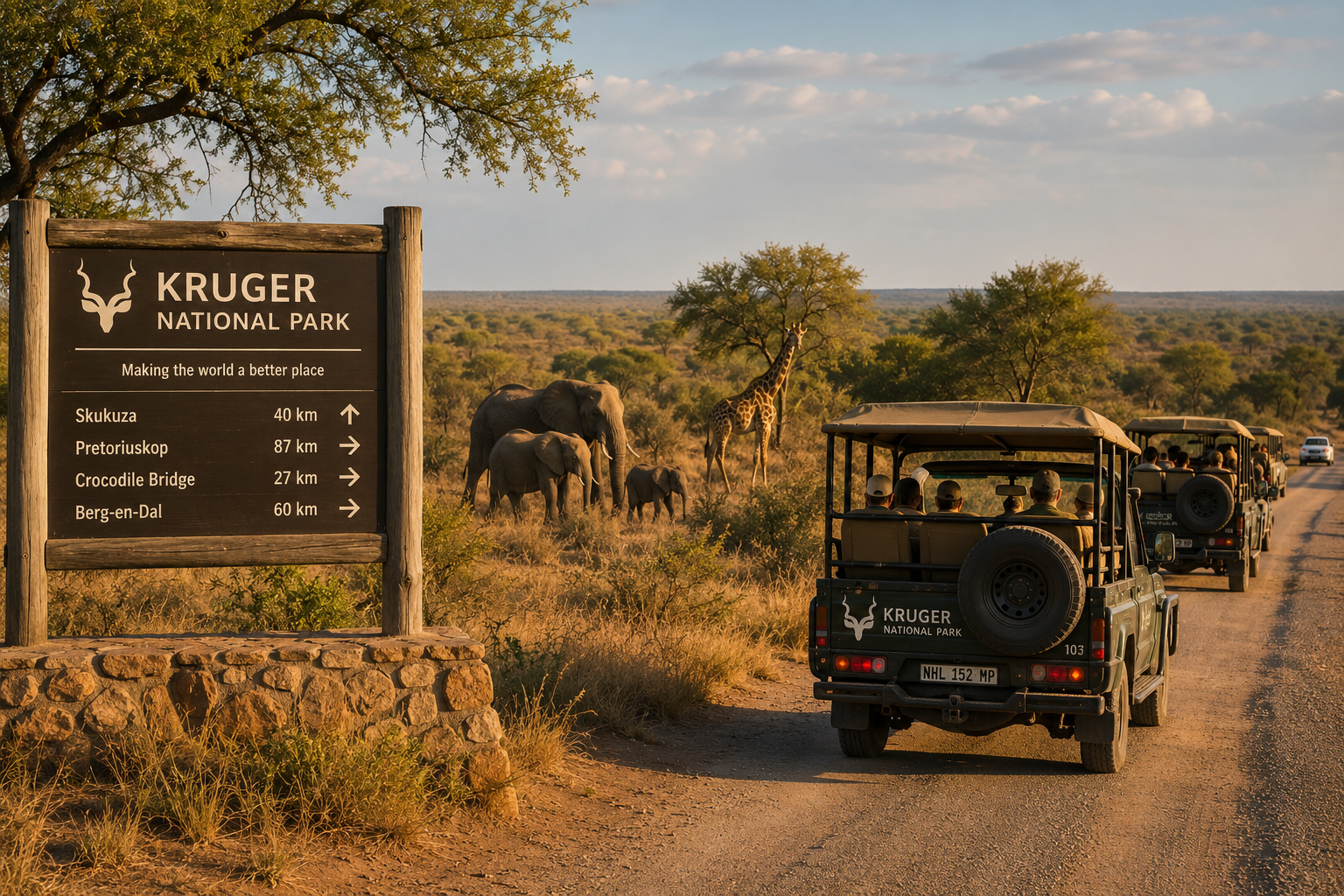
The Kruger National Park

Kruger National Park is probably Africa’s best-known safari area.
Its enormous size, species diversity, and wide range of accommodation options clearly speak in favor of this region.
However, I also repeatedly came across reports of heavily frequented sightings and large numbers of visitors.
For many travelers, this isn’t a problem. But for me, the desire for a somewhat more personal safari experience was slowly starting to take shape.

First Impression

✅ Huge biodiversity
✅ Many accommodations
✅ Good accessibility
❌ Sometimes very touristy
❌ More vehicles during sightings


Sabi Sands – A Dream for Many Safari Fans

Throughout my research, one name kept popping up:

Sabi Sands.

This private reserve borders directly on Kruger National Park and is considered one of the best safari areas in Africa.
Especially the chances of spotting leopards here are exceptionally good.
Many lodges offer a very exclusive experience with small groups and excellent service.
However, this luxury also comes with a price.

First Impression

✅ Exclusive lodges
✅ Outstanding wildlife sightings
✅ High success rate with leopards
❌ Very expensive
❌ Often well beyond my budget

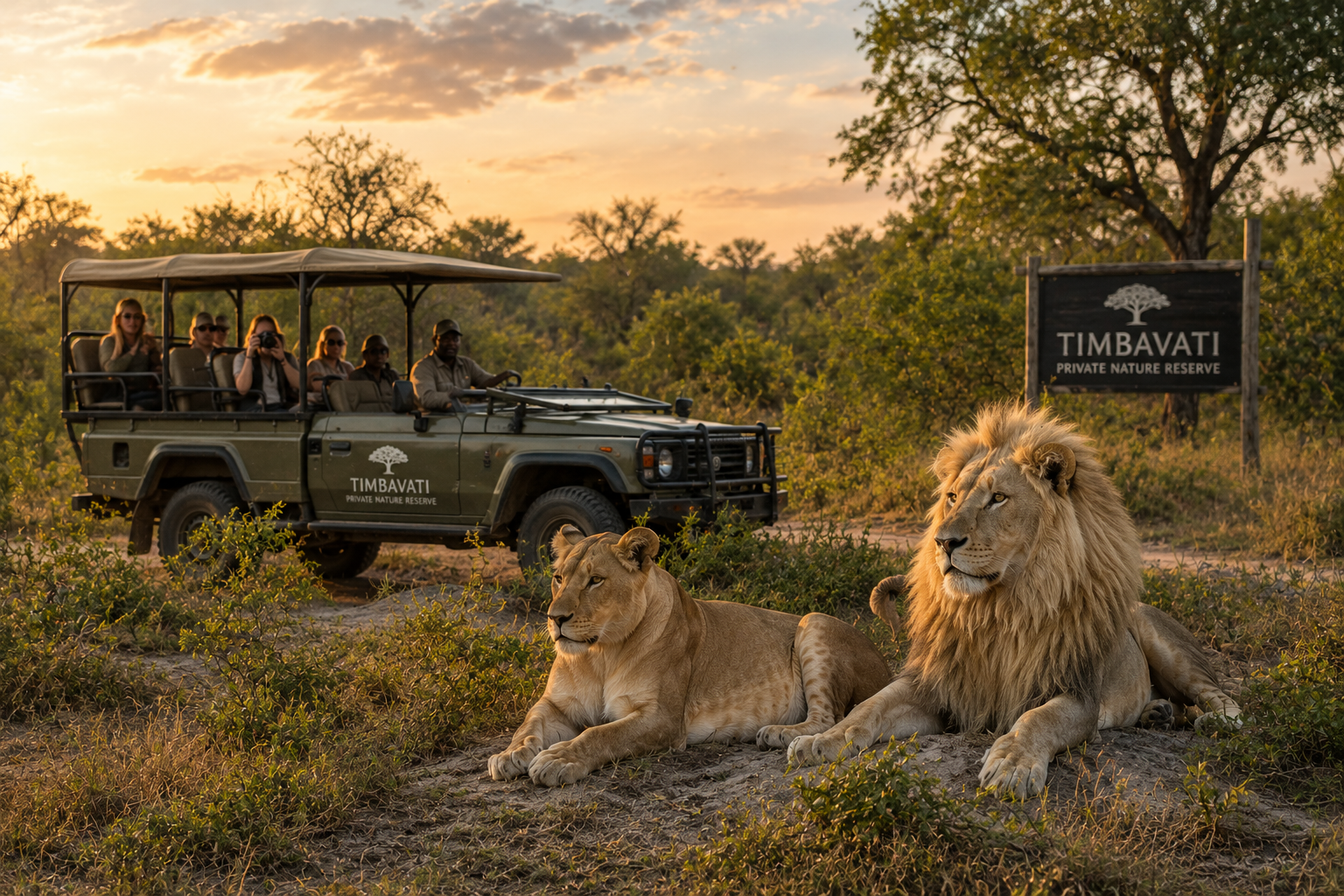
Timbavati – Authentic and Fascinating

Timbavati quickly became one of my favorites.

The region is considered somewhat more pristine and less crowded than other well-known reserves.
It’s also famous for rare white lions.
Many travel reports described the safaris here as particularly authentic and in harmony with nature.

First Impression

✅ Authentic safari experience
✅ Very good wildlife sightings
✅ Less crowded
✅ Possibility to see white lions
❌ Not malaria-free


Pilanesberg – The Practical Alternative

I also took a closer look at Pilanesberg.

Its proximity to Johannesburg makes this region especially attractive for shorter stays.
The reserve is malaria-free and also offers good wildlife viewing.
However, many accounts lacked the wilderness feeling I was hoping for on my first safari.

First Impression

✅ Malaria-free
✅ Good accessibility
✅ Ideal for short trips
❌ Less feeling of wilderness
❌ More day visitors

Madikwe – A Name That Keeps Coming Up

During my research, I noticed something interesting.

Whenever I read lists of the best safari regions in South Africa, one area kept appearing frequently:

Madikwe.

At first, I knew almost nothing about it.
But the more I read, the more curious I became.
Malaria-free. Big Five. Fewer vehicles. High-quality lodges. Great conditions for photographers.
Many points on my wishlist seemed to come together here.
Still, I wanted to keep an open mind and examine all options thoroughly.

Countless Hours of Research

In the following days, I spent many hours with travel blogs, YouTube videos, safari reports, and websites of various lodges.

Slowly, a picture began to take shape.
Some regions moved increasingly to the forefront.
Others gradually lost their appeal.
No decision was made yet.
But my list of favorites was slowly getting shorter.
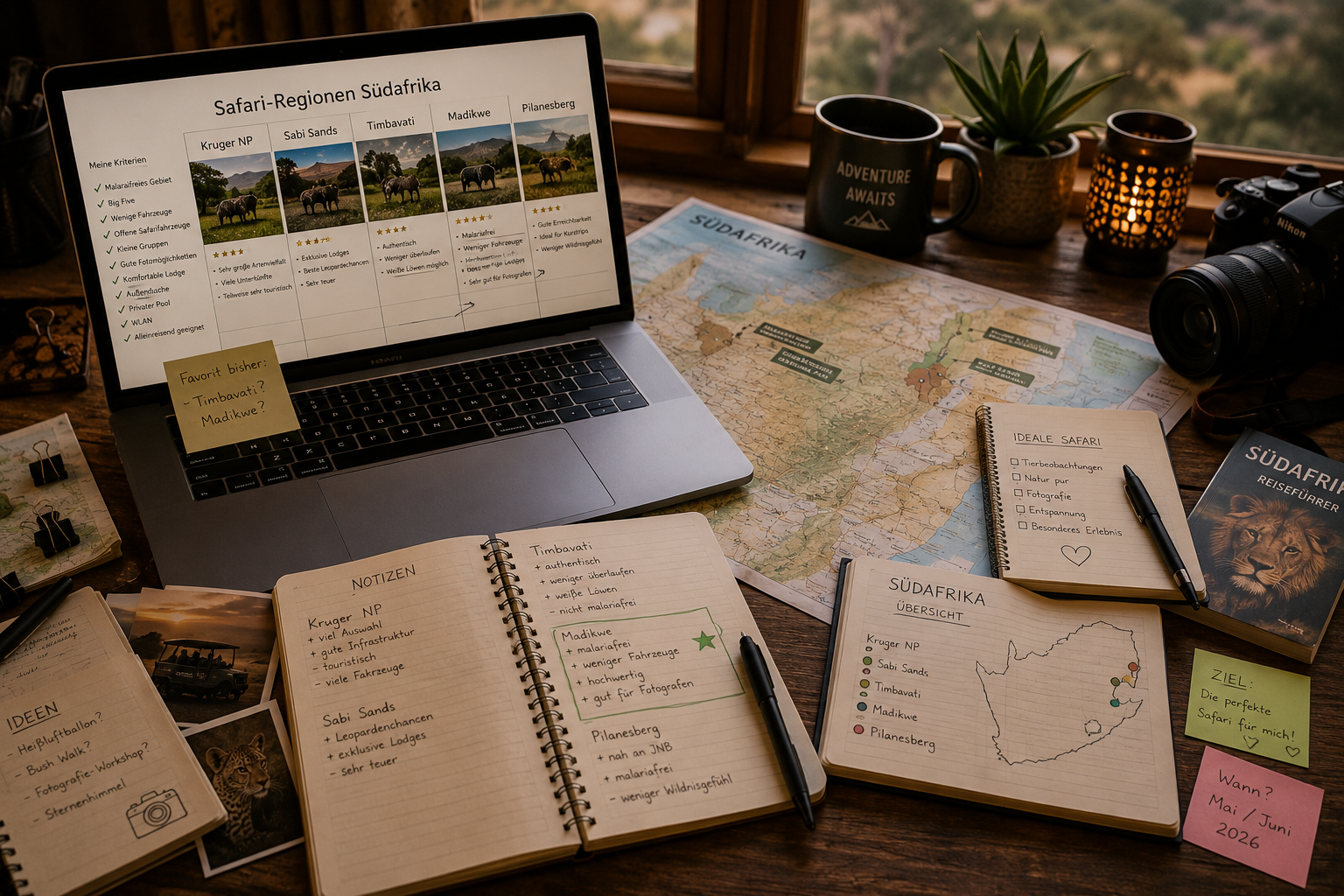


The First Favorites Emerge

After many hours of research, a few regions stood out increasingly.
Especially Timbavati, Sabi Sands, and Madikwe left a lasting impression on me.

But which region would ultimately win?

This very question will be the focus of the next post.

"The list grew smaller. From many possibilities, a few favorites emerged – and one region slowly began to pull ahead of all the others."
Open single view Project page
The Search for the Perfect Safari Region
Read
The Selection Narrows Down

In the past few days, I had read countless travel reports, watched videos, and compared safari regions.
It quickly became clear that South Africa offers so much more than just the famous Kruger National Park. Each region had its own character and unique advantages.

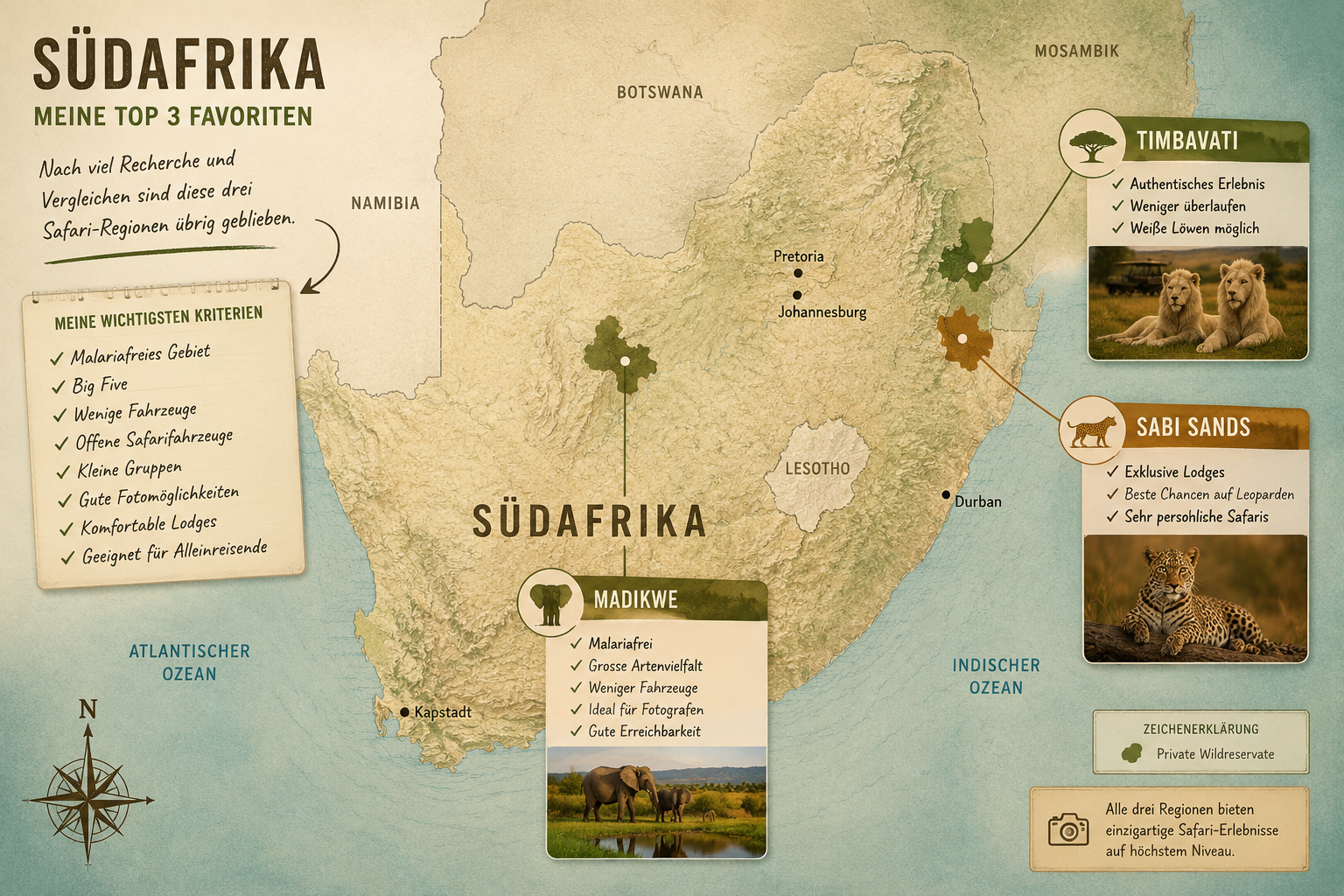
Gradually, three favorites emerged:

Sabi Sands
Timbavati
Madikwe

All three promised extraordinary wildlife sightings and authentic safari experiences. Yet in the end, only one could be chosen.


#01 Sabi Sands

For many safari enthusiasts, Sabi Sands is considered one of Africa's top wildlife reserves.
The chances of spotting leopards here are legendary. Many lodges also offer an exclusive safari experience with small groups and excellent service.

What I liked

✅ Exclusive lodges
✅ Outstanding wildlife sightings
✅ Best chances to see leopards
✅ Very personalized safaris

What counted against it

❌ Very high prices
❌ Often well above my budget

Sabi Sands remained a serious contender for a long time. Still, I kept wondering if the steep extra cost was truly necessary for my first safari.

#02 Timbavati

Timbavati fascinated me from the very start.

Many travel reports described the region as particularly authentic and less crowded than other well-known reserves.
The possibility of seeing the famous white lions added an extra layer of excitement.

What I liked

✅ Authentic safari experience
✅ Great wildlife sightings
✅ Fewer vehicles
✅ Quieter atmosphere

What counted against it

❌ Not malaria-free
❌ Sometimes longer travel time

Timbavati stayed on my shortlist until the very end and made the decision anything but easy.

#03 Madikwe

The longer I researched, the more often I found myself returning to Madikwe.
At first, the reserve was barely on my radar. But with each new piece of research, it seemed to fit my ideas better and better.

What I liked

✅ Malaria-free
✅ Big Five territory
✅ Fewer vehicles around wildlife sightings
✅ High-quality lodges
✅ Excellent conditions for wildlife photography
✅ Ideal for solo travelers
✅ Good accessibility via Johannesburg

Drawbacks

❌ A bit more remote than other regions

However, this single disadvantage hardly weighed on my decision.

Why Madikwe won in the end

Every safari region had aspects that excited me.
But no other area combined so many of my personal wishes like Madikwe did.

From the very beginning, a few criteria ranked at the top of my list:

✓ Malaria-free zone
✓ Authentic safari experience
✓ Open safari vehicles
✓ Good wildlife photography opportunities
✓ Small groups
✓ Comfortable lodging
✓ Quiet atmosphere
✓ Suitable for solo travelers

Madikwe ticked almost every one of these boxes.

Add to that the excellent reviews of many lodges and reports of relaxed wildlife encounters with noticeably fewer vehicles than in some other areas.

The more I compared, the clearer it became:

If I was going on my first safari, this was exactly the experience I wanted.

The Decision is Made

After many hours of research, comparisons, and reflections, my decision was finally made.
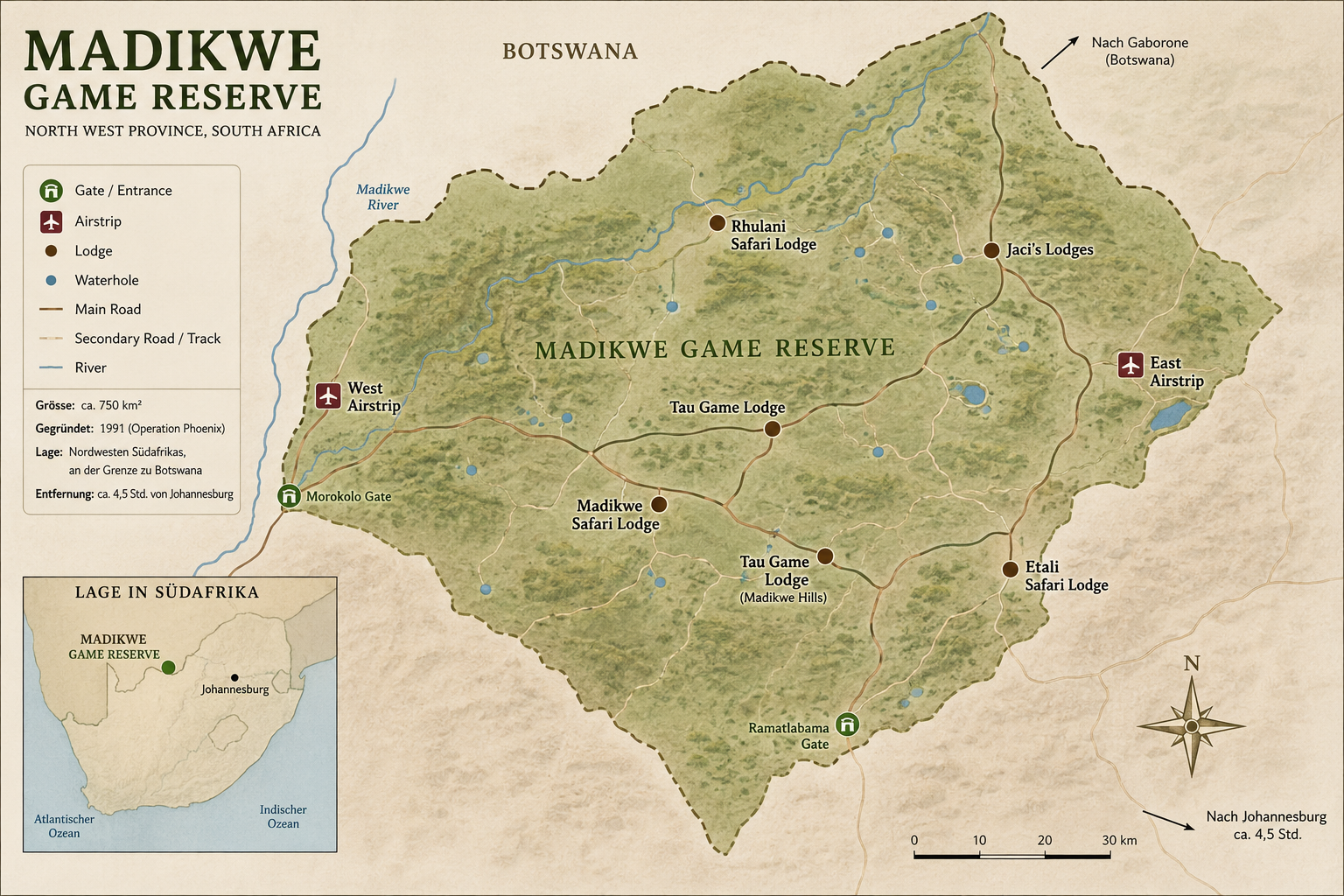
My first safari would take me to Madikwe Game Reserve.
The region combined for me the perfect mix of adventure, nature, wildlife viewing, and comfort.
With that, an important milestone was reached.

But one crucial question still remained:

Which lodge would become my home away from home?


The Next Challenge

Choosing the region marked the start of the next phase of planning.

Within Madikwe Game Reserve, I compared numerous lodges and once again spent many hours poring over reviews, photos, and travel reports.
Open single view Project page
Lodge Chosen – Why Rhulani Safari Lodge Came Out on Top
Read
Finding the Perfect Lodge

With the decision to visit Madikwe Game Reserve, the safari region was settled. But one important question remained: Which lodge would best match my vision?

It quickly became clear that Madikwe offers an impressive range of accommodations. From small, family-run lodges to exclusive luxury retreats, everything was on the table.

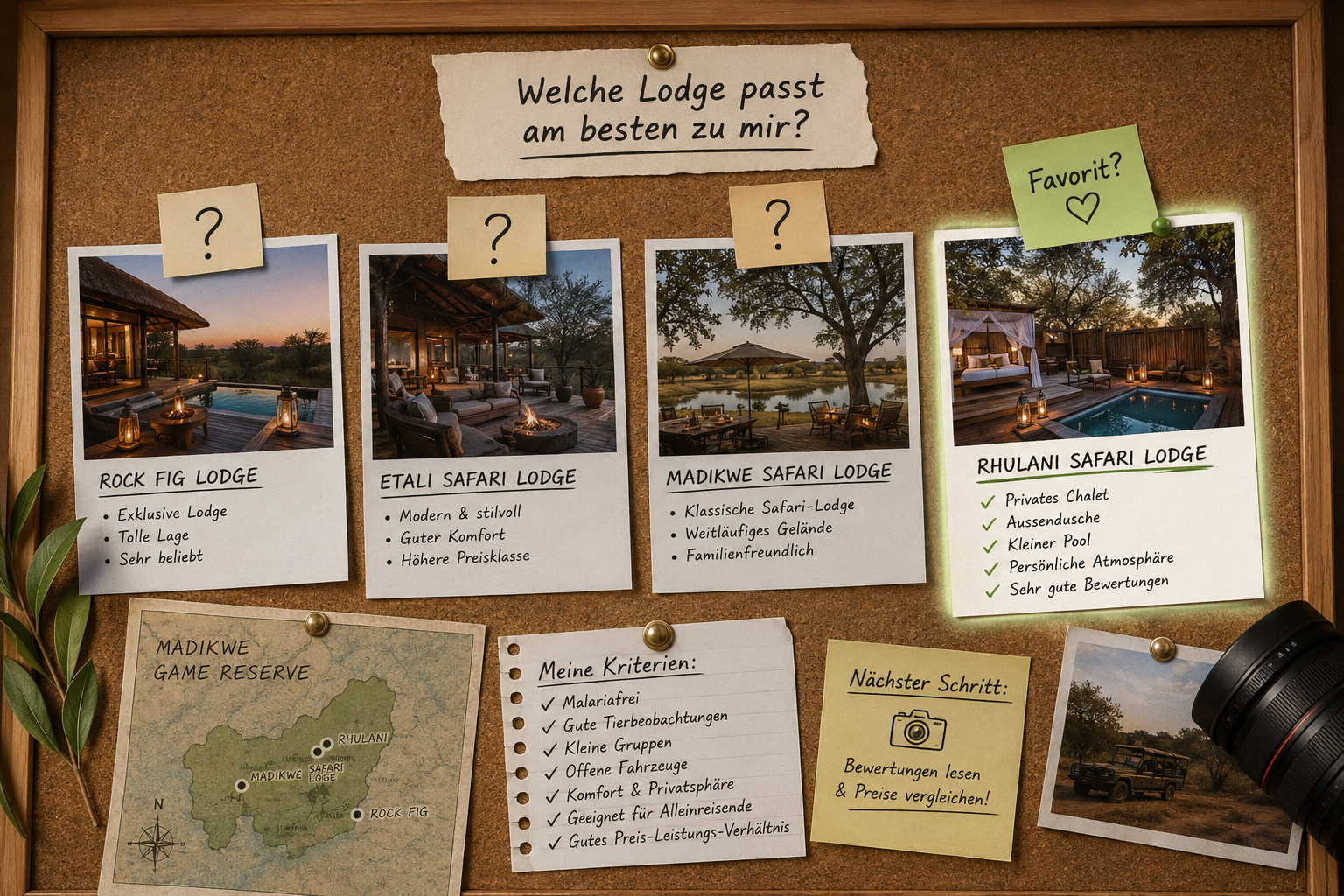
I spent many evenings comparing websites, reading reviews, looking at photos, and watching guest videos. Several favorites emerged from that process.


The Shortlist

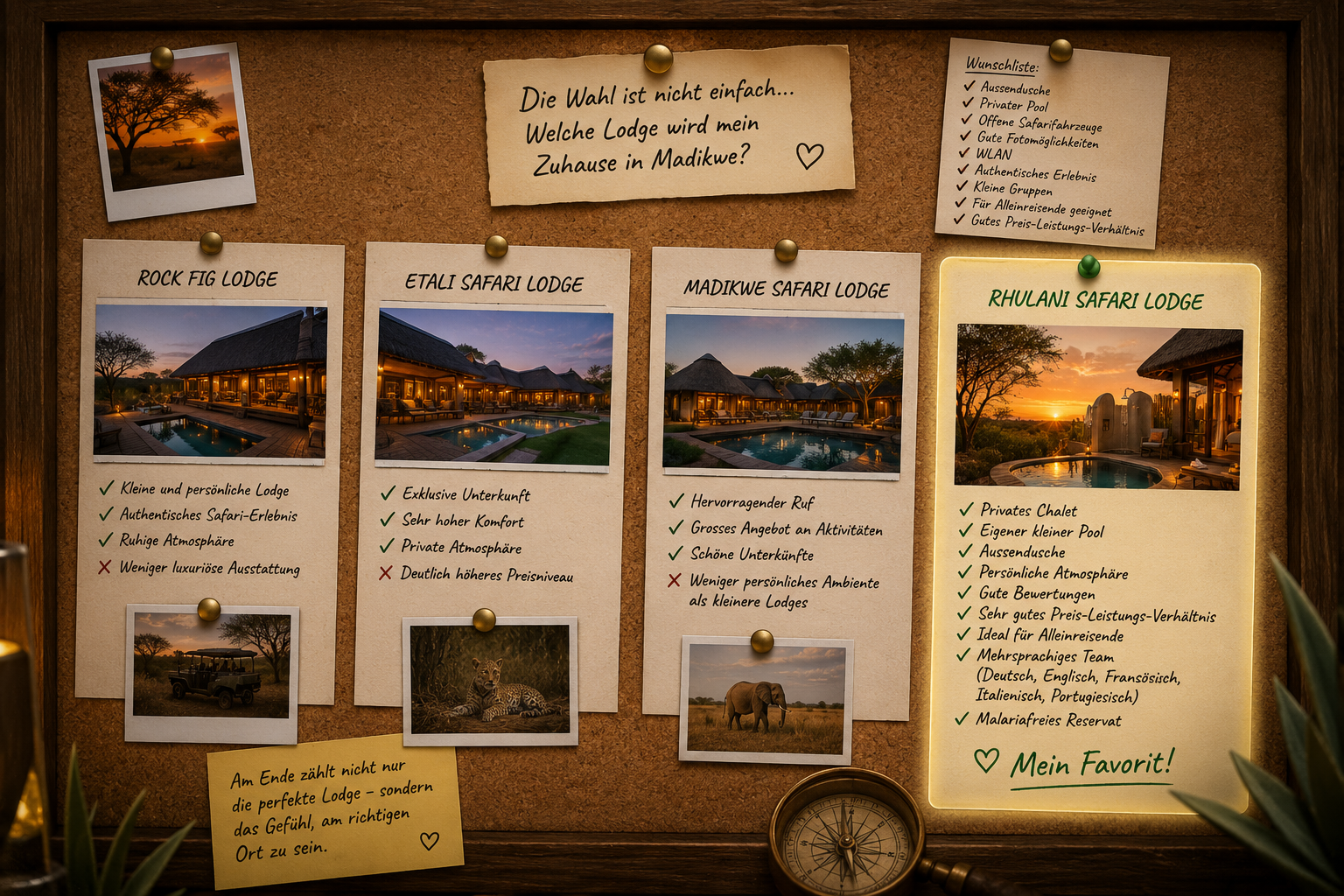
After a while, four lodges stood out as the ones that most closely aligned with what I was looking for.


Rock Fig Lodge

✅ Small and personal lodge
✅ Authentic safari experience
✅ Peaceful atmosphere
❌ Less luxurious amenities

Etali Safari Lodge

✅ Exclusive accommodation
✅ Very high comfort
✅ Private atmosphere
❌ Significantly higher price range

Madikwe Safari Lodge

✅ Excellent reputation
✅ Wide range of activities
✅ Beautiful accommodations
❌ Less personal ambiance than smaller lodges

Rhulani Safari Lodge

✅ Private chalet
✅ Own small pool
✅ Outdoor shower
✅ Personal atmosphere
✅ Good reviews
✅ Excellent value for money
✅ Multilingual staff (German, English, French, Italian, and Portuguese)
✅ Perfect for solo travelers
✅ Malaria-free reserve
❌ Slightly longer transfer within the reserve

What Mattered Most to Me

During planning, I had developed a fairly clear wish list:

✓ Outdoor shower
✓ Private small pool
✓ Open safari vehicles
✓ Good photo opportunities
✓ Wifi
✓ Authentic African feel
✓ Small groups
✓ Suited for solo travelers
✓ Pleasant value for money

The more lodges I compared, the more I found myself coming back to Rhulani.

Why I Chose Rhulani

In the end, it wasn't one single feature that sealed the deal. Rather, it was the combination of many small details.

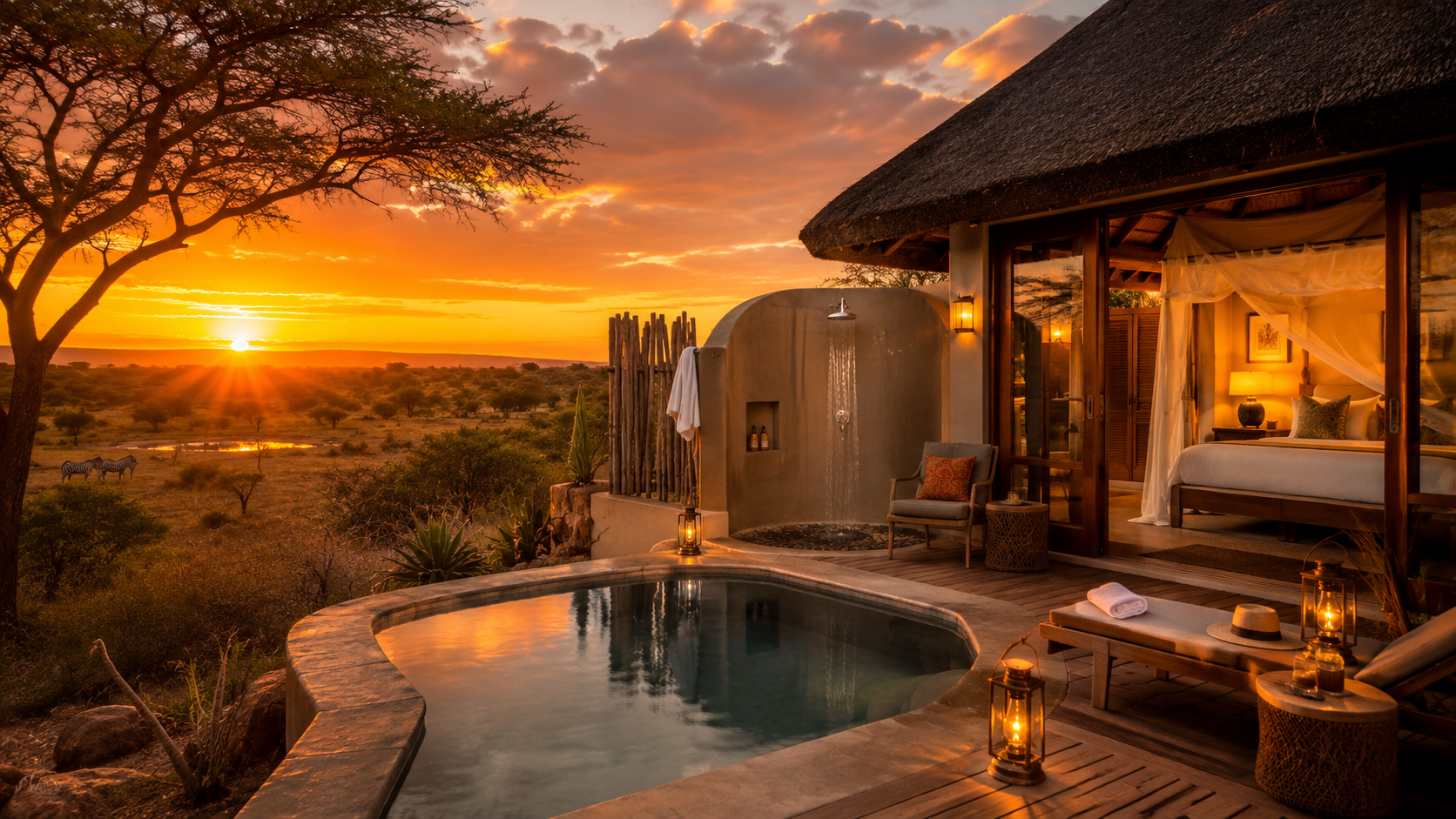
The private chalet with its own terrace, small pool, and outdoor shower matched exactly what I envisioned for my first safari. At the same time, the family-like atmosphere, manageable size of the lodge, and positive guest reviews convinced me.

The value for money also fit perfectly with my planned budget.

Eventually, I realized that with every new comparison, I kept returning to Rhulani.

That was when the decision was made.

The Lodge is Set

After many hours of research and numerous comparisons, I finally found my accommodation.

Rhulani Safari Lodge will be my home during Safari 2026.


Video Notice: This video originates from the official YouTube channel of Rhulani Safari Lodge and is displayed here using YouTube's official embedding feature. All rights remain with Rhulani Safari Lodge and the respective rights holders. I am sharing this video solely to introduce the lodge I have chosen as part of my personal safari project.

This safari project is a purely private travel and photography project. I have no business relationship with Rhulani Safari Lodge and receive no compensation, sponsorship, discounts, or other benefits for mentioning or linking to the lodge.


With this choice, another major milestone in the project was reached. For the first time, I could really picture what my stay in South Africa would look like.

"From many options came one decision – and from a dream slowly became a real journey."
Open single view Project page
Trip Booked – The Dream of Africa Becomes Reality
Read
The Booking Is Done

Choosing Madikwe Game Reserve and Rhulani Safari Lodge marked the big decisions, yet it still felt like a project stuck in the planning phase for quite a while.

It wasn’t until the final booking was confirmed that everything suddenly clicked into place.

What started as an idea sparked by initial research turned into a real journey—with fixed dates, confirmed reservations, and a detailed itinerary.

Safari 2026 is happening.

My Travel Plan


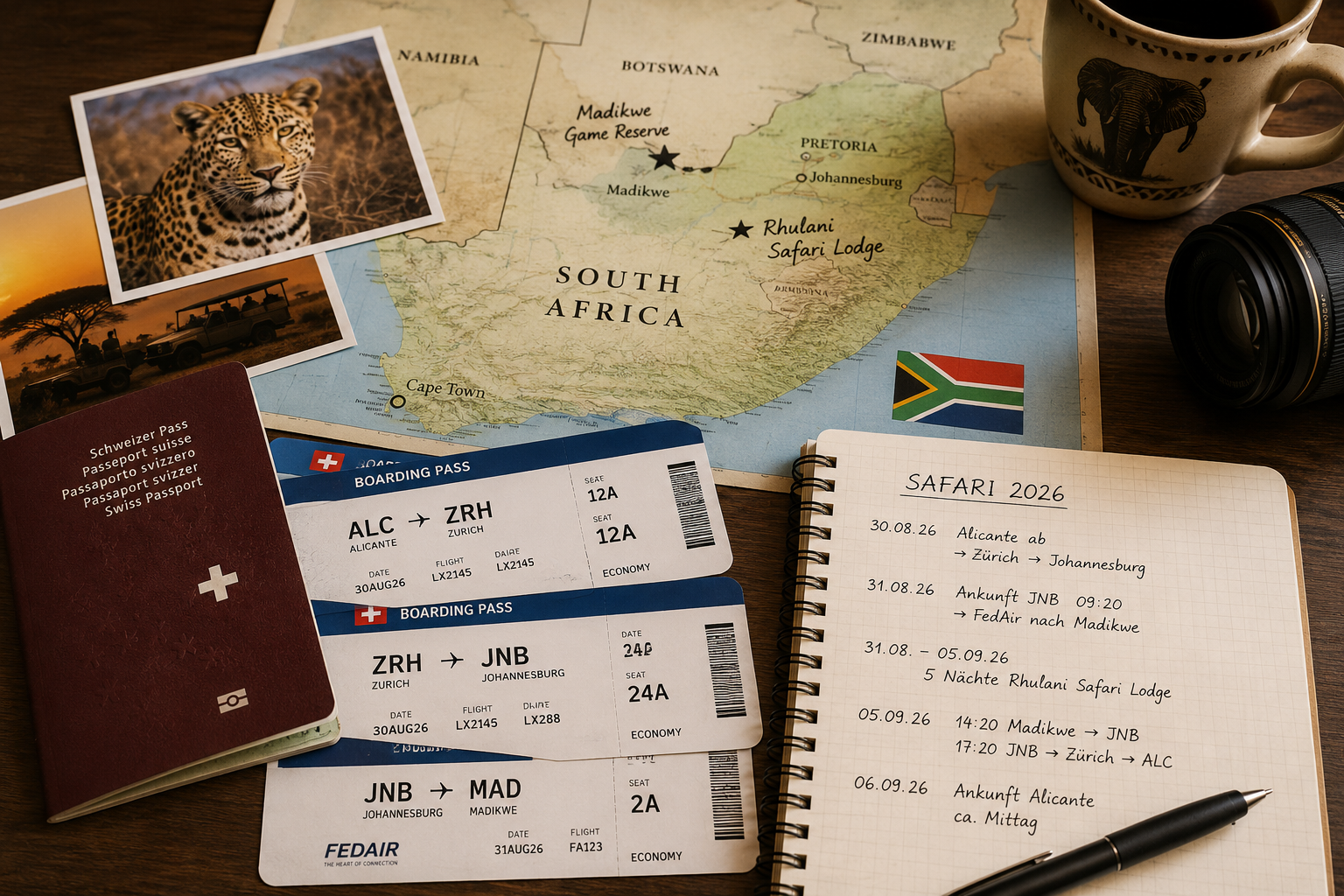
The adventure begins on August 30, 2026, at Alicante Airport.
From there, the journey starts with a flight to Zurich, followed by an evening long-haul flight to Johannesburg.

On August 31, 2026, at 9:20 AM, I’ll land in South Africa. After passport control, I’ll catch a connecting FedAir flight straight to Madikwe Game Reserve.

That’s where the real adventure begins.

August 31–September 5, 2026
5 nights and 6 days at Rhulani Safari Lodge
• Private chalet
• Own small pool
• Outdoor shower
• Daily game drives
• Full board
• Malaria-free reserve
• Countless photo opportunities

The Itinerary

August 30, 2026
Alicante → Zurich → Johannesburg

August 31, 2026
Arrival in Johannesburg at 9:20 AM
FedAir flight to Madikwe

August 31 – September 5, 2026
Stay at Rhulani Safari Lodge

September 5, 2026, 2:20 PM
Madikwe → Johannesburg

September 5, 2026, 5:20 PM
Johannesburg → Zurich → Alicante

September 6, 2026
Arrival in Alicante around midday

Growing Excitement

With the booking confirmed, a plan became a real destination.

For the first time, I could vividly imagine the entire trip—from departing Spain to the first game drive in Africa.

The anticipation grows with each passing day.

At the same time, another phase of preparation is underway: searching for the perfect camera and gear for the safari.

A Special Moment

Confirming the booking was a huge milestone for me.

For many months, this project existed only in ideas, comparisons, and research. Now the dates are set and the countdown has begun.

What was once a dream has become a real adventure.


"From that moment on, it was no longer about if the trip would happen—but only about how much longer I’d have to wait."
Open single view Project page
The Search for the Perfect Camera for the Safari
Read
The requirements were clear

As soon as I booked the safari, a new phase of preparation began for me.

It was clear from early on that I wanted to capture the trip as beautifully as possible through photography. The wildlife of Africa, the landscapes, the lodge, and all those special moments should not only remain in memory but also be preserved in photos and videos.

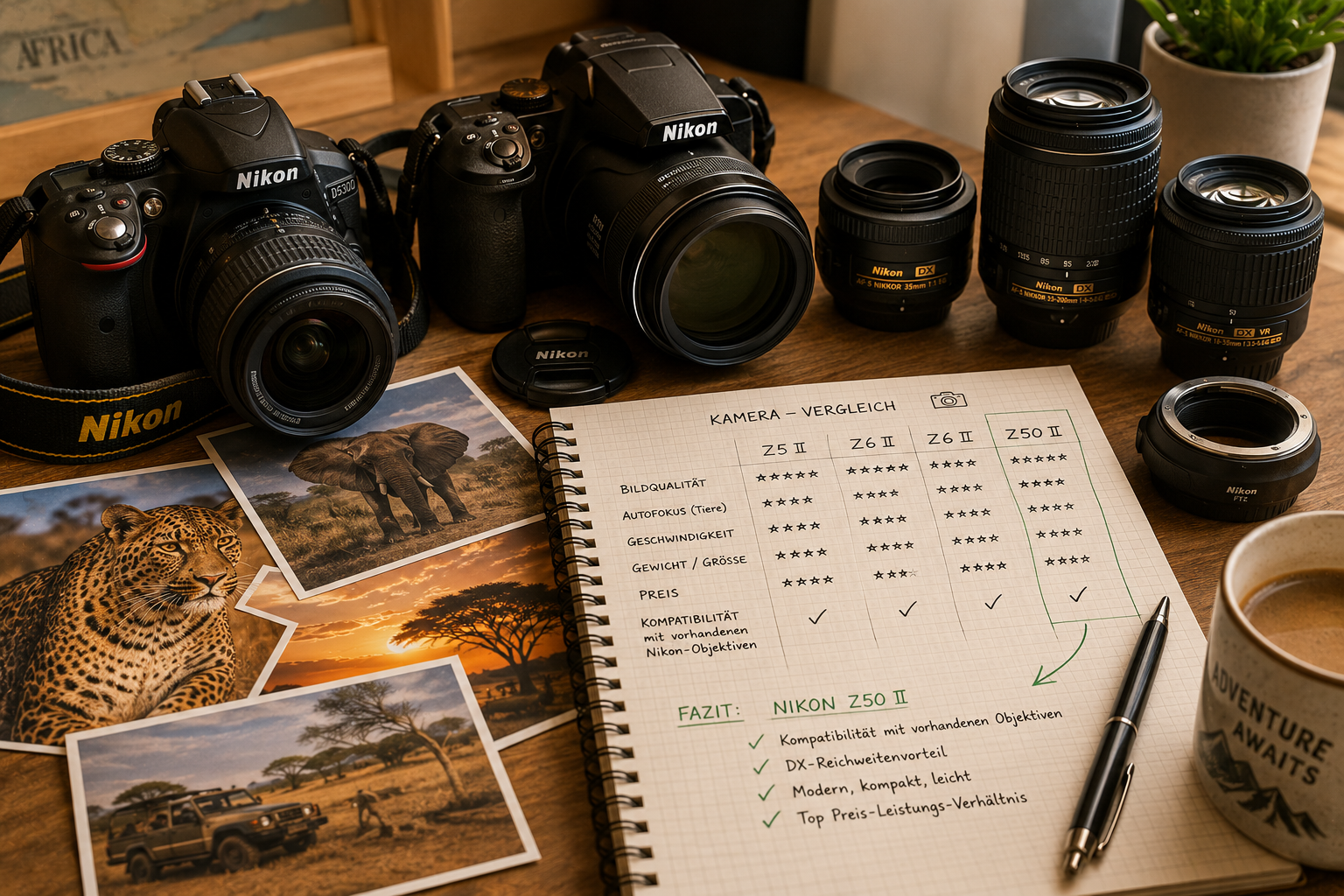
I already owned a Nikon Coolpix P900 and a Nikon D5300 with several lenses, but for the safari, I wanted to see if a more modern camera would make sense.

Current gear

Before starting the search, I had the following cameras:

Nikon Coolpix P900
Nikon D5300

Along with several Nikon lenses:

• AF-S DX 18–55 mm
• AF-S DX 55–200 mm
• AF-S DX 35 mm f/1.8G
• AF-S Micro-Nikkor 60 mm f/2.8G ED

So the starting point was good. Still, the question was whether a modern mirrorless camera could offer additional advantages.

DSLR or mirrorless?

During my research, it quickly became clear that the camera market has changed a lot in recent years.

More and more photographers are switching from traditional DSLRs to mirrorless systems. Particularly interesting were the modern autofocus systems that can automatically detect animal eyes and moving subjects.

This sounded very promising for a safari, where animal movements are often unpredictable.

The contenders

Together with ChatGPT, I compared several current Nikon models.

Nikon Z5 II

✅ Full-frame sensor
✅ Good image quality
✅ Attractive price
❌ Less specialized for fast wildlife photography

Nikon Z6 II

✅ Proven full-frame model
✅ Very good image quality
✅ Good low-light performance
❌ Already a somewhat older model

Nikon Z6 III

✅ Outstanding autofocus
✅ Professional features
✅ Very high performance
❌ Significantly higher price

Nikon Z50

✅ Compact and lightweight
✅ DX sensor
✅ Great travel camera
❌ Older generation

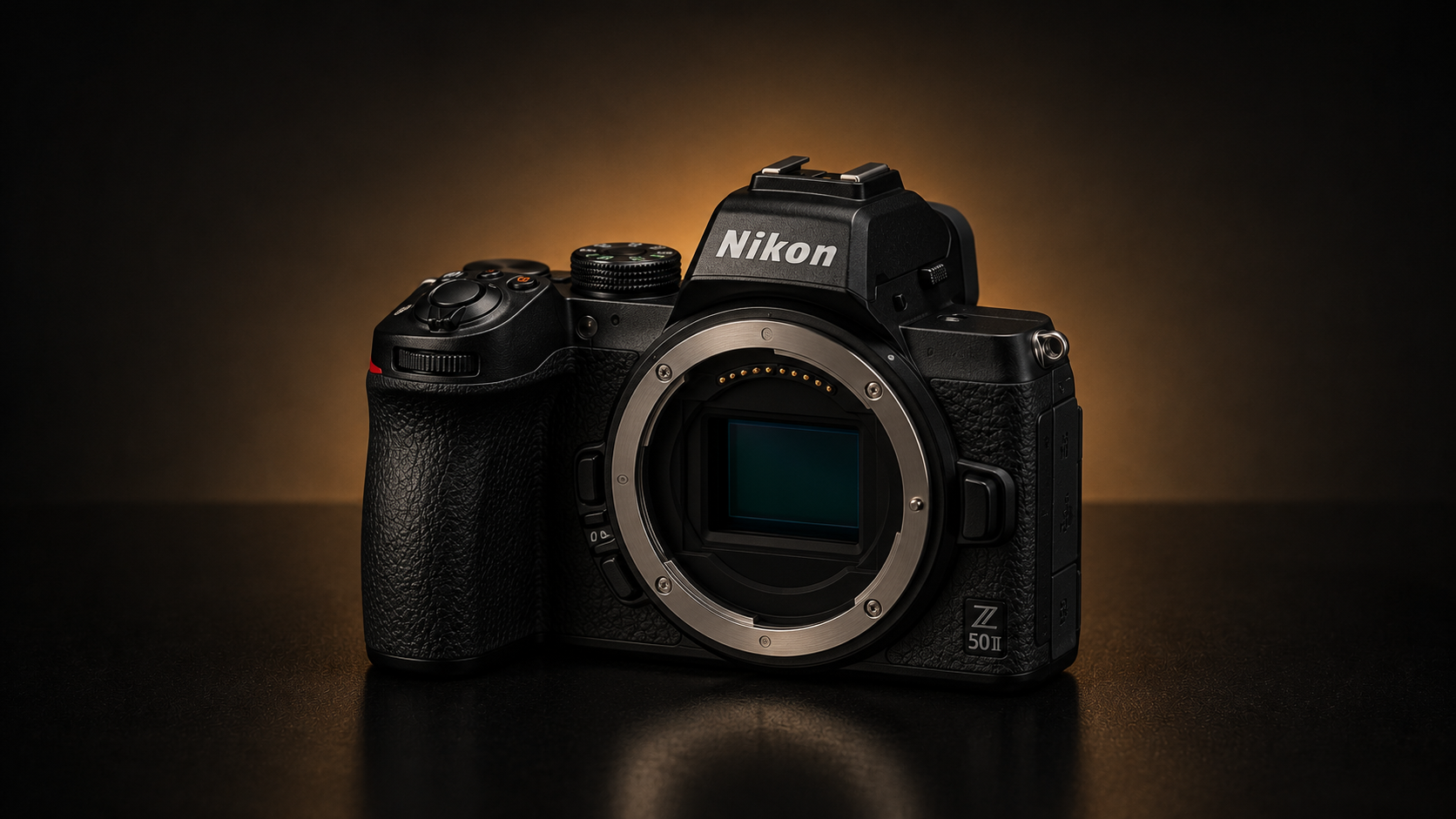
Why the Nikon Z50 II convinced me

The longer I compared, the more I kept coming back to the Nikon Z50 II.

It offered exactly the features that were especially important for my safari:

✓ Modern autofocus system
✓ Compact and lightweight body
✓ Excellent value for money
✓ Perfect for travel
✓ Modern video features
✓ Compatibility with existing Nikon lenses via the FTZ adapter
✓ DX format with an additional reach advantage for wildlife photography

That last point was particularly interesting for me. On a safari, every extra millimeter of focal length can be helpful.

The decision is made

After many comparisons and considerations, the decision was finally made.

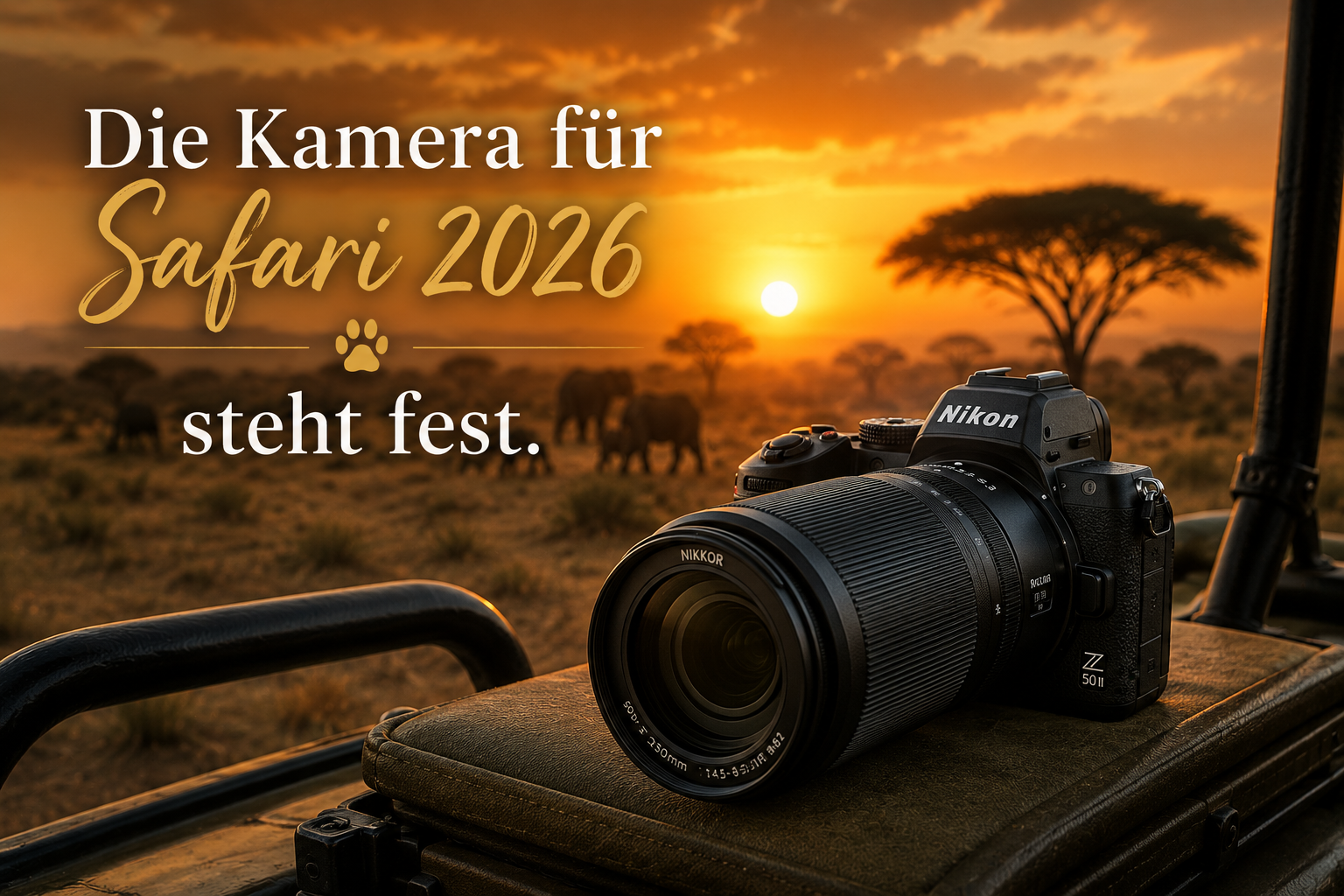
On June 6, 2026, I ordered the Nikon Z50 II along with the DX 16–50 mm and the DX 50–250 mm kit lenses.

That settled the camera that would accompany me on my first African safari.


More than just a new camera

For me, the Nikon Z50 II is much more than just a new piece of tech to play with.

It marks the transition from pure trip planning to concrete photographic preparation. For the first time, I could really picture myself sitting in the open safari vehicle later, photographing Africa’s animals with this gear.

At the same time, the Nikon Coolpix P900 remains an exciting companion when especially long reach is needed.

Another milestone

Ordering the camera was another important step accomplished.

The trip was set. The lodge was booked. And now the most important equipment was chosen.

The safari had moved a big step closer.

“Every journey needs the right gear. With the Nikon Z50 II, the decision was made on how I want to capture my memories of Africa.”
Open single view Project page