


1. Traditional AI
Works with fixed rules and clearly defined processes. Such systems are particularly suitable for predictable tasks.
AI Support / Basics
A clear introduction to artificial intelligence — practical, understandable and without unnecessary technical jargon.
Artificial intelligence, or AI, is software that imitates certain abilities we usually associate with human thinking. These include understanding language, recognising patterns, supporting decisions and creating new content.
Unlike traditional software, modern AI does not rely only on fixed rules. It is trained with data, identifies relationships and can therefore solve tasks that previously required a great deal of manual work.
Modern AI is often based on neural networks. These are loosely inspired by the human brain, although they are greatly simplified.
A simple example: when an AI system is trained with many images of cats and dogs, it gradually learns to recognise typical differences between them.
AI is already part of everyday life, often without us noticing. Many functions that now feel completely normal are supported by AI systems.
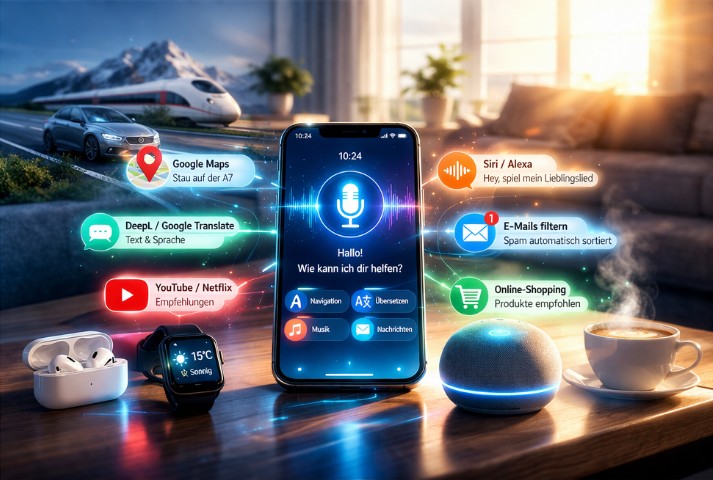
AI is built into many everyday applications — from navigation and translation to recommendations and voice assistants.
Works with fixed rules and clearly defined processes. Such systems are particularly suitable for predictable tasks.
Learns from data and can identify patterns, make predictions or improve its performance on specific tasks.
Can create new content, including text, images, music, video and programming code.
AI is changing many areas at the same time, in a way comparable to the earlier impact of the internet. It accelerates processes, supports decisions and creates new possibilities in work, everyday life and creativity.
At the same time, AI creates challenges involving privacy, copyright, manipulation, trust in content and the question of how strongly AI should influence everyday life.
AI will play a role in even more areas in the future. It is already changing not only technology, but also work, communication, education and creative processes.
It is particularly interesting that AI can support not only automation, but also ideas, analysis, planning and creative work.
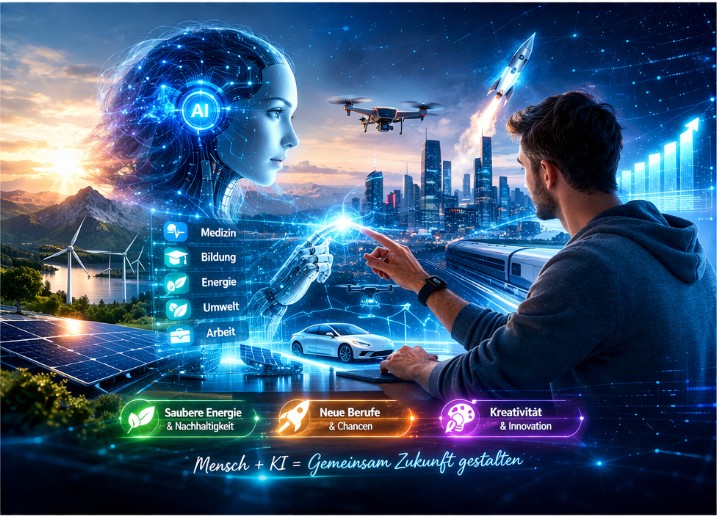
People and AI can develop new solutions together — from education and medicine to creative projects and everyday life.
AI can sound very convincing, but it is not automatically correct. It can confuse information, misinterpret relationships or invent details.
It is therefore important to verify results, compare sources and avoid placing important decisions blindly in the hands of AI.
AI is no longer simply a topic for the future. It is already part of modern life. Many applications have become so normal that we barely notice the AI behind them.
For me, AI is primarily a tool that can make many things faster, easier and more creative — provided that it is used consciously and remains under human control.